Showing posts with label Video Games. Show all posts

Monday, 16 May 2016

Unravel


   Unravel is a puzzle platform video game developed by Coldwood Interactive and published by Electronic Arts. It was announced on 15 June 2015 and released in February 2016 for PlayStation 4, Xbox One, and Microsoft Windows. The game centres on Yarny, a small anthropomorphic creature made of yarn whom the player navigates through the environment, utilising the unraveling yarn which makes up Yarny to solve puzzles, avoid dangerous creatures, and traverse obstacles.

   Although developer Coldwood's previous works received unfavourable critical reception, Unravel reportedly showed enough promise for EA's DICE to arrange a publishing deal with EA. Many would have remembered the game's developer and creative director, Martin Sahlin, presenting the game back at EA's E3 2015 conference. What however made it all so memorable was the dear man's incredibly nervous but still excited presentation, having "reacted on-stage appearance like most of us would: with shaking hands and a warbling voice." This presentation was met with a positive reception from the conference's audience, and from outside audiences as well. Following the announcement, Sahlin himself became the focus of well-circulated appreciative posts and fan art on social media website such as Twitter and Tumblr. 

   If you haven't seen it for yourself just yet, be prepared to "Awww..." your heart out (Though, I wish I was more coherent in my presentations as he was):


   The game itself, especially its aesthetic, was also well received after its announcement. I mean these gifs don't even do its beauty justice. The game did however also drew comparisons to Limbo (Most possibly due to the fact that they are both puzzle platform video games, but other than that, they are both pretty different if you truly had the chance to properly play the both of them for yourself) and Sony's LittleBigPlanet . The game's backgrounds and puzzles are inspired by the landscape of UmeĆ„, Sweden; Sahlin drew inspiration for the game after creating a Yarny doll out of tire wire and yarn during a family camping trip in northern Sweden (Which was also mentioned in the video above). Sahlin has elaborated, "We live in the sticks. It's a very small town, very far north, close to the Arctic circle. There's not a lot of people, but a whole lot of countryside. I wanted to share some of that, some of the places that I love. I think you don't really see enough of that in video games. You tend to see more fantastical stuff."

   And in addition to its design, the game runs on Sony's PhyreEngine, which has been adopted by several game studios and has been used in over 90 published titles (Such as Disgaea 4: A promise Unforgotten, Amy and all of thatgamecompany's games)


   ... And what do I have to say about all of this? Needless to say, I found incredibly huge appeal in this game's aesthetic and thought it to be one of the most breathtaking games that I have seen in a long, long time. Remembering back to my COP3 dissertation and my look into acting in animation in video games, I really felt that Unravel was able to make you emphasise with its adorable silent protagonist. He has a really simply backstory when it comes down to it, but its adorable design and incredibly endearing animation almost immediately makes you want it to remain safe throughout the game. Which isn't possible, seeing that its a puzzle platform and all, so one needs to ready themselves for when they accidentally kill the poor guy during certain challenging puzzles.

   Like many others, the game had caught my interest when I had first seen Martin Sahlin's presentation. Not only memorable because of how nervously he had gone about talking about it, but also for the fact that so much love and passion had been put into the idea itself. As he mentioned what it was that had inspired this idea in the first place (That being family and happy memories), you just know that this would be a game that would be born out of pure love, and that it would have so, so much potential to be what it ought to be.

   While I am never necessarily a part of the subjective arguments that have been held by gamers over indie video games (Heck, I haven't even had the chance to watch Indie Game the Movie just yet) and studios, seeing Coldwood Interactive finally receiving such a positive reception for this game after their past failures signifies something pretty important for all us designers. You really have to make sure that there's real love put into whatever you're working on to meet true success (Also I know that I used the word love about 5 times in the past two paragraphs, shush).


Monday, 15 December 2014

Ian Livingstone


Ian Livingstone CBE is an English fantasy author and entrepreneur. Along with his friend Steve Jackson, he is the co-founder of the popular and influential series of "Fighting Fantasy"roleplaying gamebooks and the author of many books within that series. He is also one of the co-founders of the prominent games company "Games Workshop".


Livingstone co-founded "Games Workshop" in early 1975 with flatmates John Peake and Steve Jackson. They started publishing a monthly newsletter tilted "Own and Weasel", and sent copies of the first issue to subscribers of the recently defunct fanzine "Albion", Brian Blume received one of these copies and so sent them a copy of the new game "Dungeons and Dragons" in return. Livingstone and Jackson felt that this game was more imaginative than anything being produced in the UK at the time, and so worked out an arrangement with Blume for an exclusive deal to sell "Dungeons and Dragons" in Europe.

In the late 1975, Livingstone and Jackson organised their first convention, the first "Games Day". While selling game products directly out of their flat, their landlord eventually evicted them after people kept coming to the property looking for a store that did not exist. But while they were living in a tiny trailer, the two were expanded "Games Workshop" from being a bedroom mail order company to a successful gaming manufacturer and retail chain, with the first store opening in Hammersmith in 1977.

Sadly in 1976, Peake, who had no interest in the new role-playing game industry, saw that "Games Workshop" was getting more involved with RPGs and decided to leave the company.


In 1980, Livingstone and Jackson began to develop the concept of the Fighting Fantasy game book series, the first volume of "Fighting Fantasy" was published by Puffin in 1982. While the two co-wrote the first book together in the series, the pair began writing subsequent books separately upon receiving instruction from publishers "Penguin" to write more books faster.


In the mid 1980s, Livingstone did some design work for video game publisher Domark, and in 1993, he returned to the company, this time as a major investor and board member. In 1995, Domark was acquired by the video technology company Eidos plc, which formed the major part of the newly created Eidos Interactive. In 2005, Eidos was taken over by SCi and Livingstone was the only former board member to be retained, taking on the role of product acquisition director.

Livingstone secured many of the company's major franchises, including "Tomb Raider" and "Hitman". He has especially been with the former series since the very beginning, proudly watching as it became the huge commercial success it is today.

More recently, the Livingstone Foundation is trying to gain permission from the government to build a publish school in Hammersmith that would specialise in teaching 800 students aged 11-18 STEAM: Science, Technology, Engineering, Art and Mathematics. The idea emerged as Livingstone, then Life President of Eidos, launched the next Gen skills campaign, which successfully lobbied government to add computer science to the national curriculum. If the Livingstone School is approved, it should open next year and begin teaching kids not just how to use technology, but how to create with it as well!

Livingstone wants to teach computer science to the next generation in a different way. He wants to move away from what he calls the "Victoria broadcast model of talk and chalk" to "actual learning". This, he says, is essential to the UK's economy, digital future and, hopefully, the video game industry. "We're educating children for jobs that don't even exist today".

Despite the fatigue I was experiencing that day as I rushed to meet a deadline for a certain school module (Same old, same old...), I really did find myself enjoying this talk and frankly found it to be rather different to the past ones I had attended. I thought it was a splendid idea that he is planning to open a school for children that teaches computer science, and I suppose I envy those children once they get the chance to enrol there.

Honestly all I really knew about Ian Livingstone before I attended this talk was his involvement with the "Tomb Raider" series, but it is pretty amazing to know how much he has contributed to the game industry over the last few decades, I am even tempted to pick up a few of those "Fighting Fantasy" books now.

Wednesday, 26 November 2014

100 Things Every Game Student should Know with Kaye Elling

I liked the fact that she mentioned she was a cosplayer.
Kaye Elling is a Lecturer in Computer Games at the University of Bradford and is the Course Leader for BA Graphics for Games, where she teaches observational drawing, digital sculpting and many other creative subjects. Kaye's background is in game development where she spent some 13 years working as a Character Artist and Art Manager for companies including Infogrames, Sony and Blitz Game Studios. She has created 3D graphics, and lead teams of artists and animators, on titles including the Premier Manager series, the Bratz series and the Encleverment Experiment on XBLA.

It was unfortunate that this was the only game development talk I was able to attend during my entire week there, but I was glad that it was this one as my friend and I were laughing throughout it. It was funny, frank and rather insightful talk into the video game industry. Kaye Elling was just such a joy to listen to, and it felt like time flew by so fast as we did.

Aside from how video game students should think and act during their time at university (Pretty obvious stuff to be honest, it still saddens me how hubristic most students can be...), we were reminded on how it is that we should present ourselves when we later on have to go out there. You need to earn the respects of the professionals, so commute with skill and integrity, be passionate, and of course, show that you actually know what you are talking about (Terminologies are pretty damn important).

Roles in the industry once again comes into discussion during this talk, clearly to make that decision on what it is you wish to specialise in, you have to make sure that you are absolutely passionate about it. Anyone can have ideas, but during recent times, you need some skills to back it up, don't be the one that talks and not do. To get a better chance at being hired, it of course also helps to pick up some other skills to show some flexibility.

And when working as part of the video game industry, do not make that mistake of thinking like a consumer (A mistake many of us clearly make), think like a developer. Read industry press, not consumer press, "Gamergate" is a consumer revolt, and not a developer one.

It was hilarious to see how this talk had intimidated quite a few of the attendants, because seriously, what'd you expect? Everything she said made absolute sense, and if you have the passion for it, there is no need at all to be afraid of the truths that she had laid out. And as usual, we were encouraged to focus on our portfolios, something I am really intent on working on, hopefully during the Easter holidays next year.

Seeing that Kaye Elling had to compress this list for this talk, the entire list can be found here, for those who are interested in reading further.

Sunday, 18 May 2014

Limbo


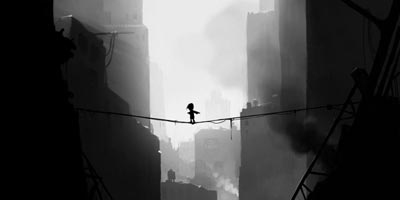
Limbo is a puzzle platform video game (It doesn't actually fit any of the well known horror game genres, but I would consider it as one due to it's eerie art style and subject matter) that was released in July 2010 as platform exclusive title on Xbox Live Arcade, though thankfully ports were made later on to the PlayStation 3 and Microsoft Windows. It was the first title by indie Danish game developer Playdead (While the second project is presently in the works, not much is known about it at this time).


The game is a 2D side scroller, incorporating the physics system Box2D to govern the environmental objects and the player character. The player guides an unnamed boy through incredibly dangerous environments and traps as he searches for his sister. Players are actually expected to fail numerous times throughout this game before finding the correct solution, hence this is why the developers called the style of play "trial and death" (Poor thing…), using interestingly gruesome silhouette-like imagery for the boy's deaths (Poor, poor thing…).

God, this is Heart of Darkness all over again...
The game is presented in black and white tones, using lighting, film grain effects and minimal ambient sounds (The soundtrack available only lasts for less than 20 minutes too, but Jesus, listen to the "Rotating Room" track when you get the chance...) to create an eerie atmosphere often associated with the horror genre, since the pre-release of a development screenshot, the game's art style and presentation has actually managed to stay consistent though the development cycle.

As many have said before, this game has been classified as an example of video games as art, much like the works of ThatGameCompany, the game breaks away from the usual norms implemented into video games we normally see in larger franchises (Though of course we still love those kinds of games, don't get the wrong idea), going for a more unique and unconventional look, often standing out for aesthetic beauty in design (Which is most definitely present in this game). 

The decision to go for a more minimalistic style was a clever and creative one, considering how it allows the players to deal with threats within the game in a surprisingly different manner (For one, by having better eye sight and keeping you more on your feet than ever before), it really did allow the developers to focus more on the gameplay design, and much like Okami, avoiding more detailed/realistic graphics was really a blessing in disguise, considering how well received the art style was for this game.

And I'm pretty sure that this game was able to get the special kind of reaction it wanted from its audience, especially with its interestingly open and ambiguous story and eerie but rather enthralling, absolutely atmospheric setting.


While not much is given about the storyline of this game, save for the tagline "Uncertain of his sister's fate, a boy enters Limbo" and of course the title itself, those are probably enough to hint at where this actually takes place, as well as perhaps explains the open ending to the game… oh wait what am I saying? They obviously aimed to make this game open to interpretation from the very beginning. 

As he looks for his missing sister, he encounters only a few human characters, who are either aggressive and wants him dead, runs away, or are dead (The latter are the most helpful of them all, just a heads up), strangely however there are practically no more humans seen about in the second half of the game...


Inspirational stuff, these art games...

Saturday, 17 May 2014

Kuon

This full blown image on their site gave me a heck of a shock the first time I found it.
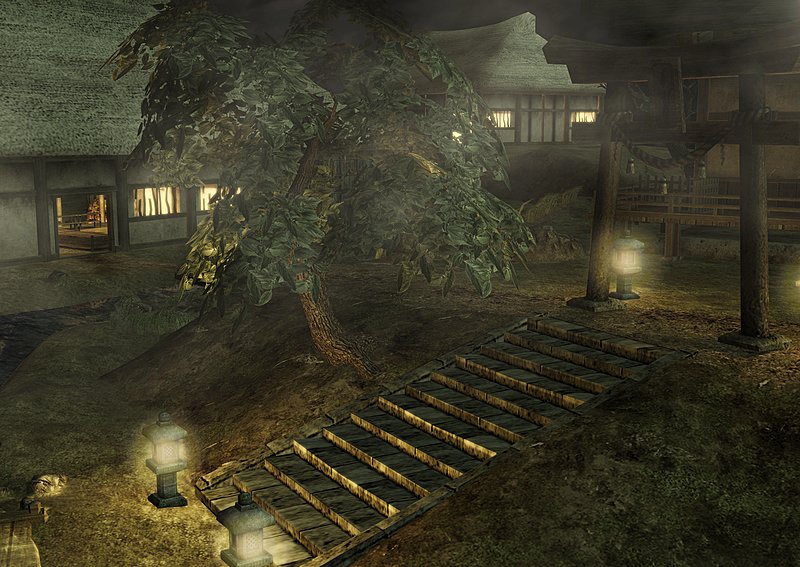
Kuon is a really underrated survival horror video game developed and produced by From Software (The same folks who brought you Demon's Souls and Dark Souls) in 2004. 

Oh yeah no surprise there...
The game is based on an ancient type of Japanese horror story called kaidan, in its broadest sense, kaidan refers to any ghost or horror story, but it has an old-fashioned ring to it that carries the connotation of the Edo period Japanese folktales, and so this term is no longer as widely used in Japanese as it once was; Japanese horror books and films such as Ju-On and Ring would more likely be labeled by the katakana hora (horror) or the standard Japanese kowai hanashi. Kaidan is only used if the author/director wishes to specifically bring an old fashion air into the story (Such as this game, which is quite a rarity, even among all the japanese horror games we have seen thus far).


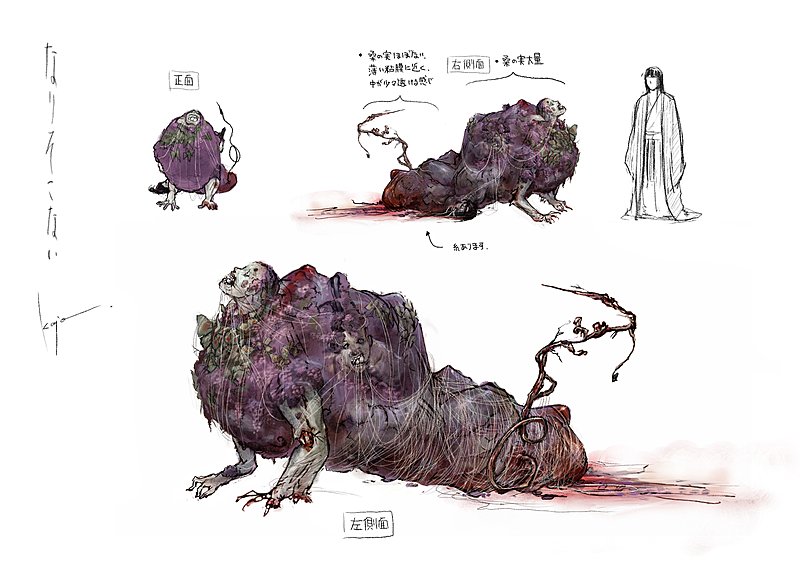
The setting takes place in a dark and gruesome mansion in the Japanese town of Kyoto where mutated creatures and other horrors lurk. The game is set during the Heian Period (794 to 1185) of ancient Japan, most of the game follows the protagonists as they explore a feudal Japanese manor at night (Oh god why?!), as well as an old mountainside temple. The main antagonistic forces or the game are various forms of undead, including ghosts and resurrected corpses, but the latter aren't just your typical zombies, they are horribly mutated monsters created from fusing several dead bodies together.


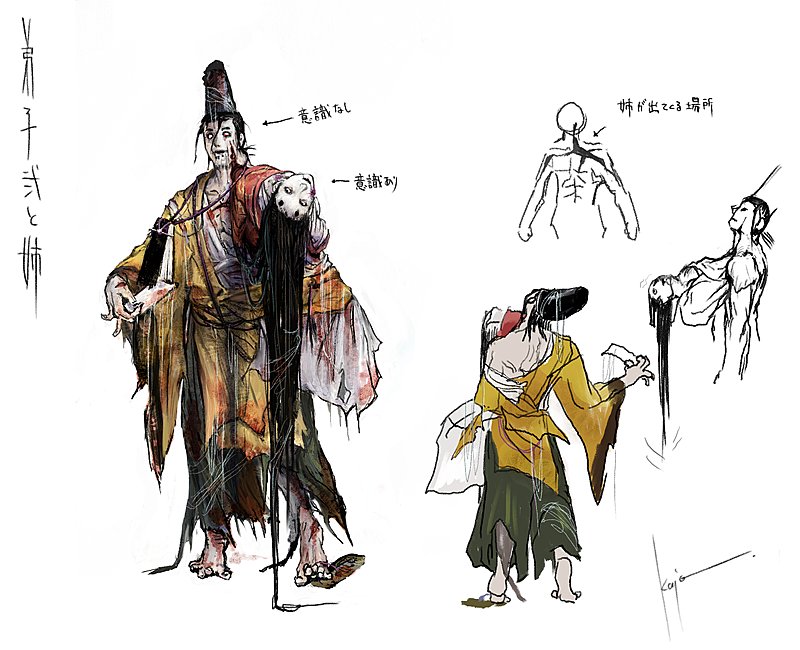
There are a total of three playable characters featured in the game (The third one however will only be unlocked once the chapters involving the first two characters have been completed), throughout the game the characters encounter a pair of mysterious twins, often found singing a dark aria, the player eventually learns that they are the manifestations of two evil mulberry trees (Kids… right?).

While it most definitely has a fantastic ambience to it, it is once again the game mechanics that causes the overall grade for the game to fall short (The running feature seems almost pointless, so as long as you have the utmost patience when it comes to your characters walking throughout the whole thing). 


Nonetheless, it is most definitely an entertaining game with really interesting (And dare I say beautiful) visuals, the creature designs are pretty darn amazing, while they might not seem like the most creative ones at time, the designers have done a great job in bringing out the creepiness factor for each and every one of them. The atmosphere is just so darn amazing, especially when one normally might consider that a gore-fest staging might ruin the eerie mood and tone (I mean, tunnels flooded with blood and rooms filled with severed body parts are scary, but it definitely does not give off the same feeling of the unknown like a deserted factory or hospital will, with no signs of the true horrors that are hidden within until it is too late...), and folks should simply give this game a try just for the experience.


Now if you will excuse me, my laptop has been behaving weirdly throughout this whole write up… I think it's time to restart it before moving onto the next subject...


Friday, 16 May 2014

The Cat Lady


The Cat Lady is an adventure psychological horror game developed by Remigiuz Michalski, it was released on December 2012 in English and on May 2013 in Italian (Though the english voice acting remains). It is an indie game made using Adventure Game Studio. An album was also released featuring music by Warmer, 5iah and Tears of Mars. 

Whilst I was facing a rough patch in my life in the past few months, a friend had actually mentioned this game to me whilst I was discussing with her about psychiatrists, let's just say it wasn't what I had expected when it came to indie horror games. It is however a perfect example as to why I adore horror games so much, there are must some titles that prove to be surprisingly therapeutic to play, especially where they have a decent storyline and well developed characters that you can relate to. 

On a somewhat related note, Outlast is not one of these uniquely therapeutic horror game titles, in fact it is one of the most stressful horror games one would ever dare to play… and so it is pretty damn awesome.


The plot follows protagonist Susan Ashworth, a chronically depressed, middle-aged woman with no friends, her only companions being stray cats, earning her the cliche but nonetheless insulting title of the Cat Lady among her neighbors. 


One night she decides to end her life, but this instead leads her to a mysterious world where she encounters the Queen of Maggots, who makes her immortal and gives her the task of ridding the world of five psychopaths referred to as the "parasites". Whilst reluctant and only seeking peace in death, Susan isn't exactly given a choice and is sent back to the world of the living, where she is soon forced to carry out the first part of her task.


The game deals with mature themes such as depression, suicide, and loneliness, though now and then some dry humor is added into this otherwise very deep game. The themes of depression and suicide have always been done in a far too cliche or ineffective manner… and honestly, yeah, somewhat cliche moments still do occur in this game, but I can't blame them for that, it's pretty hard avoiding one-liners and those so-called abstract scenes (Wow they sounds harsh). Anyway, cliche isn't entirely bad, and besides, only a small percentage of this game is presented in that way.

And aside from that, I find the main protagonist to be likable and actually relatable (Save for her unfortunate disdain for dogs…) as she progresses along, and I think we can all agree just how awkward and dumb those suicide helplines tend to be, her distrust towards most people despite their oh-so kind mindset of desiring to 'help' and 'understand' her situation is also incredibly understandable.


Let's just say that this is the most movie-esque game I have ever come across (This would perhaps be the only game movie that would actually turn out right, if they ever made it into a movie that is), whilst it most definitely has a creepy and rather gothic feel to it overall, most scenes tend to be more dramatic or action-related than scary (The sound effects still do get me now and then… stupid cringing piano punch).  

Going back to the art style of the game however, it is gorgeously stylistic as seen in these few screenshots, while most scenes tend to be in black and white, the ones that are colored have an absolutely rich look to them, the characters are never actually colored (With the exception of their clothes), and so it is really cool to see how clever they are when it comes to the use of lighting. I also love how they don't actually color every single thing in, a few spot colors are instead used, be it for the characters' clothing or the blood stains. Overall I just really like the contrast of colors and shadows in each scene, especially the more monochromatic ones.


While it might seem like a side scroller game most of the time, the creator was able to create more unique poses for the characters (So they won't simply be showing us their sides to us for the entirety of the game) as well as different camera close ups to enhance certain scenes. Each character definitely has a set of different expressions to go with whatever situation they are put in, I however find it unfortunate that it is rather difficult to make them out considering the usual distance put between the character and the camera itself, and there aren't many close ups when it comes to them pulling their more interesting facial expressions.


One of the more uniquely designed scenes, as the character's thoughts
decorate the walls of her home.
The Adventure Game Studio is an open source development tool developed in 1997 that is primarily used to create graphic adventure games. It is aimed at intermediate-level game designers (Aww and I thought I had a chance to mess around with it once I get my hands on it) and combines an integrated development environment for setting up most aspects of the game with a scripting language based on the C language to process the game logic. (I would still love to learn more about it one day, especially if it is able to produce a game as beautiful as this one)

Aside from The Cat Lady, thousands of other games have been produced using this software, many of them being professional quality. Such examples include The Blackwell series by Wadjet Eye Games, Resonance by XII Games and Gemini Rue by Joshua Nuernberger. Numerous Sierra releases have also been made through this software.

Friday, 1 November 2013

Darkstalkers (Capcom)


Thought I'd write up on something Halloween related here too (Though I should have already done so yesterday). If you are a fan of sprite designs, I am sure that you already know that the first installment of Darkstalkers was pretty much the game to set the bar for quality sprite animations, in terms of both aesthetics and animations.

Darkstalkers is a series of 2D fighting games developed by Capcom since 1994, it is set in a pastiche Gothic horror universe and features a highly stylized, cartoonic graphic style, the fun bit is that the series' characters are based on either various kind of monsters from different mythologies or their hunters. It is this game that introduced many concepts that would be later used in later Capcom fighting games, including the use of 16-bit color animation sprites and gameplay mechanics that would later be employed in the Street Fighter Alpha and Marvel Vs Capcom series.

While fruitlessly searching for at least one name that had worked on these sprites, I however managed to stumble upon a very interesting and entertaining article that explains how the Twelve Principles of Animation are applied in this game!


I had failed miserably with my first attempts in creating a sprite a few years back, and so I am really looking forward to properly learning about the process in designing sprites (Hopefully as beautiful as these) in one the later semesters, this game (Along with Street Fighter III) will be my main inspirations for sprite designs when that time comes!